

Independence Day has been observed in the United States for nearly two and a half centuries, marking the signing of the the Declaration of Independence on July 4th, 1776. This foundational moment in U.S. history is often considered the root of American society’s collective consciousness, promoting values of personal liberty and self-determination.
When exploring the history of the early United States and the American Revolution, a good place to start is the National Archives and Records Administration (NARA). In their Milestone Documents collection, you can view the Declaration of Independence as well as other important primary sources such as the Lee Resolution, the Articles of Confederation, and the Treaty of Paris. To learn more about the individuals behind these documents, check out Founders Online, where you can access thousands of the letters and personal writings of revolutionary leaders.

But wait! There’s more! Milestones and well-known figures are only one part of the story. The full context of America’s journey to independence paints a much more complex, and often messy, picture. NARA’s ongoing digital exhibits series, Road to Revolution, is a good starting place for understanding the events, social climate, and attitudes surrounding the War for Independence. If you’d like to narrow your focus, the government documents collection in Strozier holds several volumes of state records from the colonial/revolutionary era, including those of Massachusetts, North Carolina, Rhode Island, and more. One example is the Revolutionary Records of Georgia, which compiles surviving documentation of council proceedings, legislative decisions, and disciplinary actions from the revolutionary period.
And remember! When looking at historical information, it’s always important to consult a variety of sources. Every historical account is shaped by the cultures and personal perspectives that created it, meaning it may have omissions, exaggerations, or other forms of misinformation. Sometimes these are intentional; sometimes they are not. Either way, you’ll be missing a large portion of the story by taking a single resource at face value. Whose American Revolution Was It? by Alfred F. Young and Gregory H. Nobles examines the historiography of the Revolutionary War and the ways by which historical narratives shift over time.
For instance, the American War for Independence was not isolated to the original thirteen colonies. What about the history that took place a little closer to home?
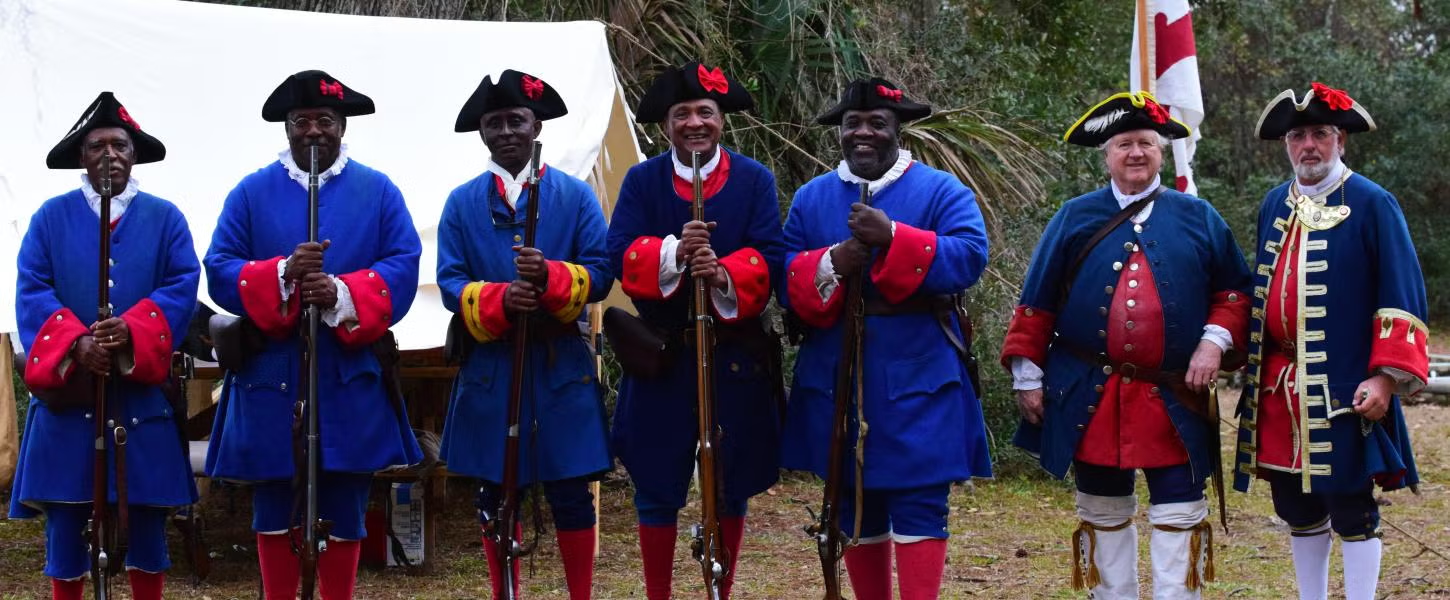
While Florida did not become a United States territory until the Onís-Adams Treaty of 1819, it played a unique role in the revolutionary conflict. Florida was a key battleground between British and Spanish colonial forces, as well as a place of refuge for Black and Native Americans fleeing enslavement and violence (see The British Period from the National Park Service, and History of Fort Mose from the Florida State Parks). For print resources, you can find Florida in the American Revolution and Spain, Britain, and the American Revolution in Florida in FSU’s Special Collections. Independence Lost: Lives on the Edge of the American Revolution by Kathleen DuVal takes a more personal approach to this history, bringing focus to the experiences of individuals and how the revolution shaped their lives.
Delving into Florida’s revolutionary past highlights communities and perspectives that are often omitted from the prominent Revolutionary War narrative. For those who faced brutality at the hands of both the British Empire and the European American rebels, the choice between loyalty and rebellion was not so simple. The book Black Patriots and Loyalists by Alan Gilbert explores the diversity in strategy used by Black Americans fighting for emancipation in this context. For an analysis of how slavery related to (and exposed the hypocrisy of) American revolutionary ideals, see Slavery, Propaganda, and the American Revolution. Other useful resources include the National Archives’ List of Black Servicemen from the records of the Revolutionary War, and The Black Presence in the Era of the American Revolution, published by the Smithsonian’s National Portrait Gallery.

This conflict also profoundly impacted the indigenous nations of North America. NARA’s digital exhibit “Native Americans & the American Revolution” outlines the primary considerations faced by Native Americans at this time and how major alliances such as the Stockbridge community and the Six Nations Confederacy responded to these concerns. To delve deeper, you may want to check out The American Revolution in Indian Country: Crisis and Diversity in Native American Communities, as well as Creek Internationalism in an Age of Revolution. Another fascinating resource is Chainbreaker, the memoir of Governor Blacksnake, who led the Seneca nation during the period of the Revolutionary War.
This Independence Day, broaden your understanding of the American Revolution by checking out some of the resources recommended here! You can also consult the U.S. Government LibGuide to continue your journey.
Our physical Government Documents collection is located on the lower level of Strozier Library, past the periodicals. Don’t hesitate to ask a library staff member for assistance! Likewise, you can always reach out to your subject librarian for guidance on locating relevant sources and materials.

This made my 💕 heart happy